CONFLICT THEORY
What is Conflict Theory?
Karl Marx was a German philosopher, economist, historian, sociologist, political theorist, journalist, and socialist revolutionary during the 19th century. He worked primarily in the realm of political philosophy and was a famous advocate for communism, a theory or system of social organization in which all property is owned by the community and each person contributes and receives according to their ability and needs. Marx’s best-known work is the Communist Manifesto (1848), which he wrote with Engels. The work predicts the final overthrow of the capitalist system, detailing how workers will one day rise up to seize the means of production.
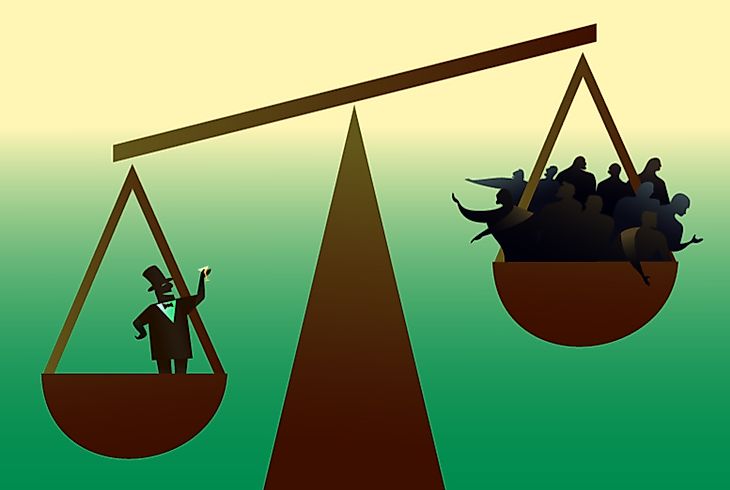
Conflict theory according to Karl Marx states that the state is in conflict with one another because of the competition for limited resources. It is the struggle for domination and power between groups or classes, mainly the powerful and poor. As stated in the conflict theory, those with wealth and power try to hold on to it by any means possible, mainly by suppressing the poor and powerless. A basic premise of conflict theory is that individuals and groups within society will work to maximize their own benefits.
Marx’s conflict theory focused on the conflict between two primary classes each bounded by mutual interest and private property. The bourgeoisie represents the members of society who hold the majority of the wealth and power. While, the proletariat includes those considered working class or poor. With the rise of capitalism, Marx theorized that the bourgeoisie, a minority within the population, would use their influence to oppress and abuse the proletariat, the majority class.
Poverty in the Philippines
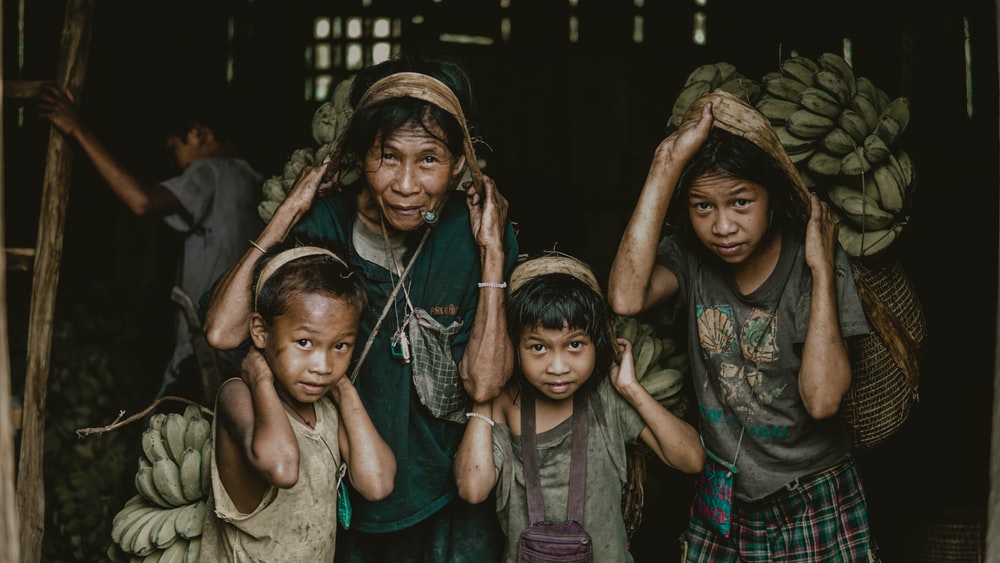
One main social issue that is easily seen in the Philippines is poverty. Many Filipinos suffer from poverty and have a hard time recovering from this issue. According to the Philippine Statistic Authority (PSA), 16.6% of the Philippines population falls under the poverty line and “This translates to 17.6 million Filipinos who lived below the poverty threshold estimated at PhP 10,727, on average, for a family of five per month in 2018.” It’s not new that we hear about statistics and news channels talking about the presence of poverty and events related to this. There are a few reasons as to why poverty exists, and what could happen if this issue continues to exist in a country.
Asian Development Bank stated a few reasons why poverty could exist in a society. These reasons include low economic growth, a weak agricultural sector, increased population rates and a high volume of inequality. Since the Philippines is not known to be a big exporter of goods, economic growth is not as big. Factors that contribute to low economic growth include unemployment and inflation. Many families that fall in the poverty line can not afford proper housing because property costs here in the Philippines, especially in Manila, are too high. This also takes into account that some families do not earn a lot of money due to the availability of jobs that could sufficiently provide for the family. According to The Borgen Project, in 2012, poverty in the Philippines affected 19.2% of the population in terms of the inability to afford comfortable housing. The Philippines is also known to have an increase in its population annually. Even if the Philippines is a relatively small country, about 1 million Filipinos are officially added to the population every year. There are more reasons why poverty is rampant in the Philippines, and most of these reasons affect the livelihood of many Filipinos.
The Borgen Project stated a few effects of poverty. One effect is child labor. Some children have no choice but to help their parents work. This is because they need to earn more money, and education might not be affordable for them. This effect is also related to the increase in population, as poor families have more family members per family. Statistics show that 3.6 million children aged 5-17 are affected by child labor. Child labor also leads to malnutrition. Families can not afford sustainable and healthy food and water, so they have to settle for foods that are not as filled with nutrients to save money. Malnutrition can affect the health and safety of some Filipinos, and this can severely affect their livelihood and lifestyle. One more effect is the crime rate in the Philippines. Unfortunately, some Filipinos resort to committing crimes to be able to survive. Since resources are scarce, especially for the many people living under the poverty line, the competition for these goods is very high. This would cause people to do anything to provide for their families.
How is Poverty related to Conflict Theory?

According to Karl Marx, society is in constant conflict due to the competition for resources and power. This theory emphasizes the inequality between the different societal classes, it mainly revolves around the upper class people. The main goal of these individuals is to maximize their own profit. These individuals who compete for resources are usually those belonging to the upper class. Relating this to poverty, we see how those in the upper classes thrive in regards to wealth in society by using the labor of those in the lower classes. They rely on the lower class for their own benefits, taking their resources as their own and leaving whatever is left to them. For example, many wealthy families pay low wages to nannies to care for their children, gardeners to tend to their yards, and maids to clean their homes. As a result, the gap between the rich and poor will continue to increase. In the conflict theory, those in the upper class wish to remain in their hierarchy level by restricting access to those in the lower class preventing them from ascending the economic ladder. The reason why poverty still persists worldwide is because of the ongoing system of the economy. A person’s status usually, but not always, determines their position or power in the society. For example, those groups of individuals belonging to the wealthy class have the privilege of sending their children to better schools resulting in them having better education while the ones in poverty do not. The problem with this shows how the upper class creates a system beneficial only to their own kind.
Water Crisis in the Philippines
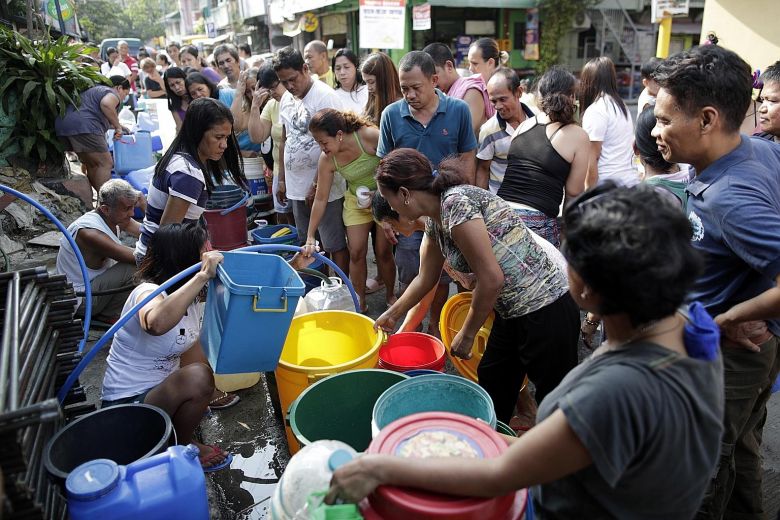
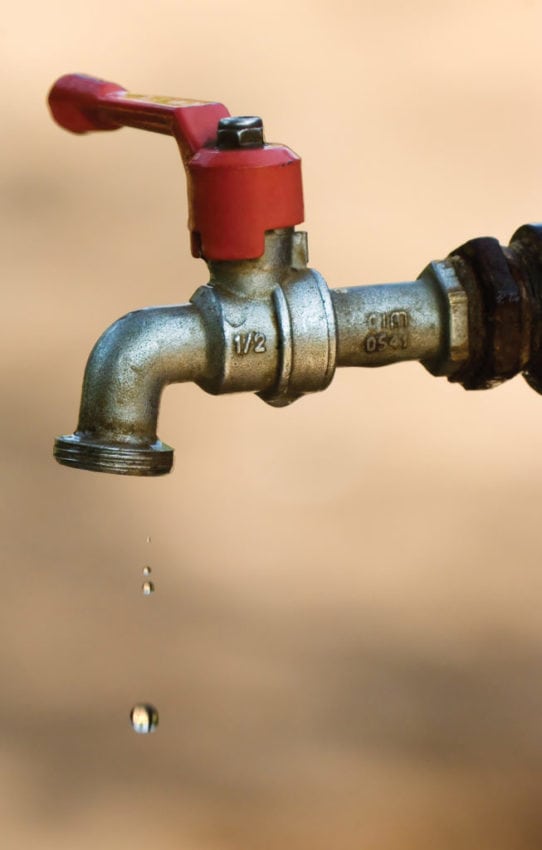
Water is essential to life. We use water in our houses for cooking, bathing, and washing the dishes and clothes. Although we can live without food for a few weeks, we would die within a few days without water. A human being needs about 2 to 3 liters of water a day to survive. However, in the Philippines, according to Water.org, an international nonprofit organization that deals with water crisis, nearly seven million Filipinos rely on unimproved, unsafe and unsustainable water sources and more than 24 million lack access to basic sanitation and clean drinking water. Manila Water Corporation also noted that the reservoir of La Mesa Dam, which is Manila’s source of water supply, has critically low levels of water and is the lowest it has been in the past 12 years. People who fall under the poverty line are affected the most by the shortage of water.
Lack of access to clean water and sanitation is a matter of life and death. The shortage of water supply in Metro Manila and other parts of the country can lead to serious health consequences. When water is scarce, people are forced to rely on drinking water sources that may be contaminated and unsafe. As a result, thousands of Filipinos die every year due to waterborne diseases such as diarrhea, cholera, dysentery, and typhoid which are associated with lack of access to safe drinking water, inadequate sanitation, and poor hygiene. In fact, in 2016, one of the top 10 leading causes of death in the Philippines was acute watery diarrhea, claiming over 139, 000 lives.
Furthermore, water shortages do not only affect people who live in water-scarce areas but also have a huge impact on food production. According to the United Nations’ Food and Agriculture Organisation (FAO), water scarcity can affect global food production and thereby global food security. According to the International Water Management Institute, about 70 percent of freshwater is used for agriculture while only 10 percent on domestic uses. Without water, people do not have a means of watering their crops and sustaining their animals. As a result, they wouldn’t be able to provide food for the fast-growing population which may lead to hunger and malnutrition.
How is Water Crisis related to Conflict Theory?
Conflict theory shows a perspective on how society functions and focuses on the unequal distribution of power and resources between social classes. Human relationships and social structures all experience inequalities of power, with this being said, some individuals and/or groups gain more rewards and benefits than others. On March 6, 2019, around 10,000 households across Metro Manila started to lose water supplies. The wealthy people living in this area are not very affected by this as they can still afford to buy water, but the real victims of the water shortage are the less fortunate. For example, often times the little water supply left will go to the upper class and the lower classes will have to suffer and struggle to find water. The water supply is dictated by those with societal power, wherein the wealthy are prioritized and the poor are neglected. The water shortage is a way for the ruling classes to control the lower classes and abuse the power that they hold over people that come from poorer backgrounds and have less paying jobs. The conflict theory is seen throughout the water shortage issue as it emphasizes the unequal treatment and distribution of water supplies when it comes to rich and poor people. Through Marx’s conflict theory, we are able to understand how the society works and seek a more balanced society so that everyone can make the best use of their benefits without bringing each other down, which in the long run brings about positive social changes. By being able to analyse the behavior of people, we can bridge the gap between the social classes and work towards a more equal society.
References:
- Chappelow, J. (May 19, 2019). Conflict Theory. Retrieved from https://www.investopedia.com/terms/c/conflict-theory.asp
- HistoryExtra. (n.d.). Your Guide to Karl Marx. Retrieved from https://www.historyextra.com/period/victorian/your-guide-to-karl-marx-who-was-he-what-was-the-communist-manifesto-and-why-is-he-important/
- World Health Organization ( March 22, 2019). Water shortage in the Philippines threatens sustainable development and health. Retrieved from https://www.who.int/philippines/news/feature-stories/detail/water-shortage-in-the-philippines-threatens-sustainable-development-and-health
- Water.org. (n.d.). Philippines’ water and sanitation crisis. Retrieved from https://water.org/our-impact/philippines/
- Sentlinger, K. (n.d.). Water scarcity and agriculture. Retrieved from https://thewaterproject.org/water-scarcity/water-scarcity-and-agriculture
- Project, B. (2019, December 9). The Extreme Effects of Poverty in the Philippines. Retrieved from https://borgenproject.org/effects-of-poverty-in-the-philippines/
- Philippine Statistics Authority. (December 6, 2019). Proportion of Poor Filipinos was Estimated at 16.6 Percent in 2018. Retrieved from https://psa.gov.ph/poverty-press-releases/nid/144752
Pictures:
- Conflict Theory. (n.d.). Retrieved from https://www.worldatlas.com/r/w1200-h701-c1200x701/upload/83/4f/79/untitled-design-57.jpg
- Poverty. (n.d.). Retrieved from https://images.unsplash.com/photo-1494832944834-a08818c634b0?ixlib=rb-1.2.1&ixid=eyJhcHBfaWQiOjEyMDd9&w=1000&q=80
- Water Shortage in the Philippines. (n.d.). Retrieved from https://www.straitstimes.com/sites/default/files/styles/article_pictrure_780x520_/public/articles/2019/03/14/yq-philpwater-13032010.jpg itok=9K9yXys5×tamp=1552555193
- Gap between Rich and Poor. (n.d.). Retrieved from https://cdn5.vectorstock.com/i/1000×1000/79/89/gap-between-rich-and-poor-vector-13547989.jpg
- Water Shortage. (n.d.). Retrieved from https://www.land.com/wp-content/uploads/2015/05/texas-water-rights.jpg
Follow My Blog
Get new content delivered directly to your inbox.
 Introduction to the Philosophy of Human Person